
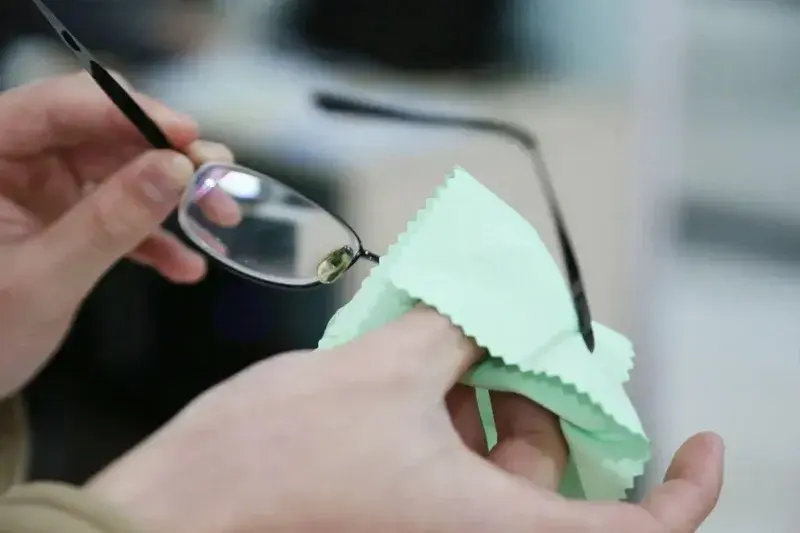
An ordinary microfiber cloth is not automatically anti-fog
Evidence note: "Independent industry guidance" below covers general lens care, mechanism and published anti-fog research. Kingda has no product-specific anti-fog result cited here; "Kingda-specific evidence" is limited to real cleaning-cloth images and catalog formats, which are not anti-fog evidence.
Microfiber is widely used to remove fingerprints, oil and loose debris from eyewear. That cleaning role matters because surface residue can affect clarity and lens care. But the fiber name alone does not establish an anti-fog function. If a cloth has no identified treatment and no product-specific evidence, describe it as a cleaning cloth—not as an anti-fog cloth.
The existing guide to microfiber versus cotton for eyeglasses answers the general cleaning-material question. This article addresses a narrower purchasing question: what must be different, controlled and tested before a cloth carries an anti-fog claim?
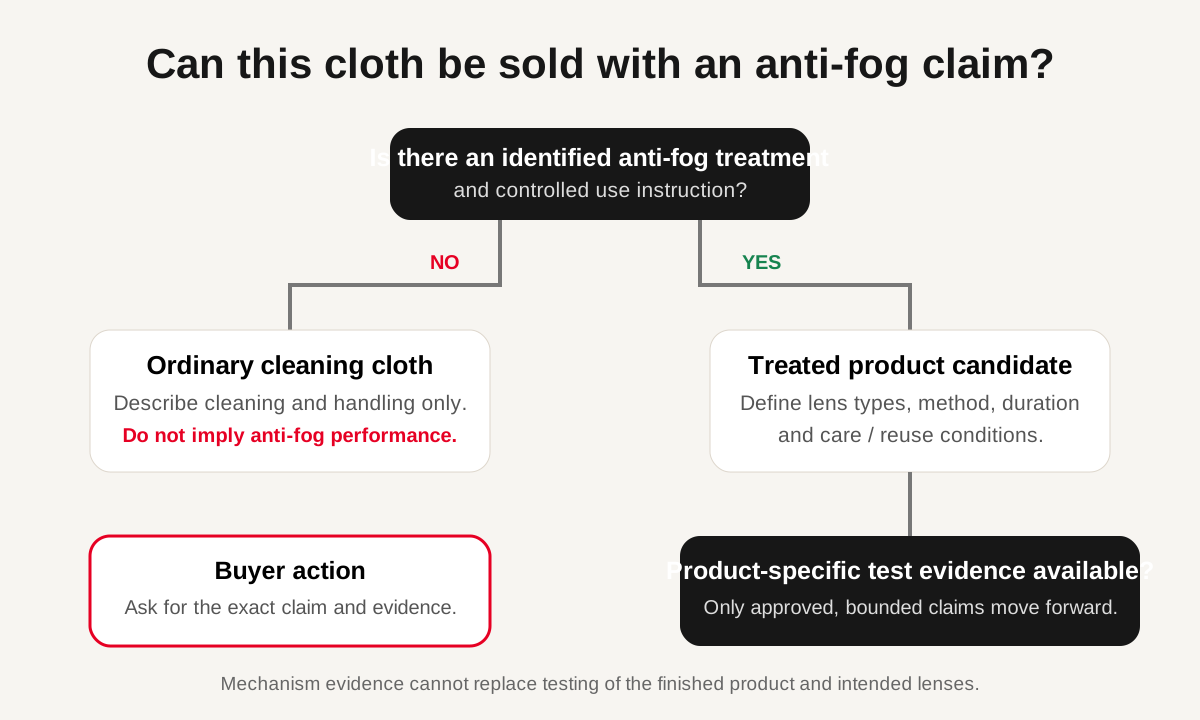
How a treated anti-fog product can change condensation
Fog forms when water vapor condenses into small droplets that scatter light. Some anti-fog approaches make the surface more hydrophilic so condensed moisture spreads into a more uniform film instead of discrete droplets. A peer-reviewed coating study describes that spreading mechanism and also discusses duration limits. It is mechanism evidence, not proof for an unnamed commercial cloth.
ZEISS's AntiFOG product explanation describes a thin temporary film left by its own wipe system. Its stated duration belongs to that tested product and use instruction. It cannot be generalized to every treated cloth, and it says nothing about Kingda's ordinary cleaning-cloth range.
Anti-fog claims need boundaries, not adjectives
A controlled evaluation should identify the lens substrate and coatings, contamination state, pre-cleaning method, treatment application, temperature and humidity conditions, fog exposure, observation method and pass/fail criterion. It should also define whether the claim concerns initial use, repeated uses, storage, washing or a particular time period.
A comparative study indexed by PubMed found performance differences among anti-fog agents and observed that prolonged fogging could still produce droplets. That supports a conservative conclusion: "anti-fog" is not an unlimited promise, and a result under one method should not be extended to other lenses, environments or care cycles without evidence.
Likewise, lens coating compatibility must be verified for the intended eyewear. ZEISS lens-care guidance is useful independent context, but the lens maker's current instructions and the anti-fog product's own validated directions remain the decision sources.

Give the supplier a claim-first specification
- Intended claim: write the exact consumer or buyer-facing statement you want to support.
- Product identity: define cloth construction, treatment, packaging and use instructions.
- Lens scope: identify substrates and coatings, plus exclusions or lens-maker restrictions.
- Test conditions: agree preparation, application, environment, fog exposure and scoring method.
- Duration and reuse: test only the time, number of uses, storage or care condition you intend to claim.
- Approval evidence: keep the finished-product report, sample revision, label and instruction together.
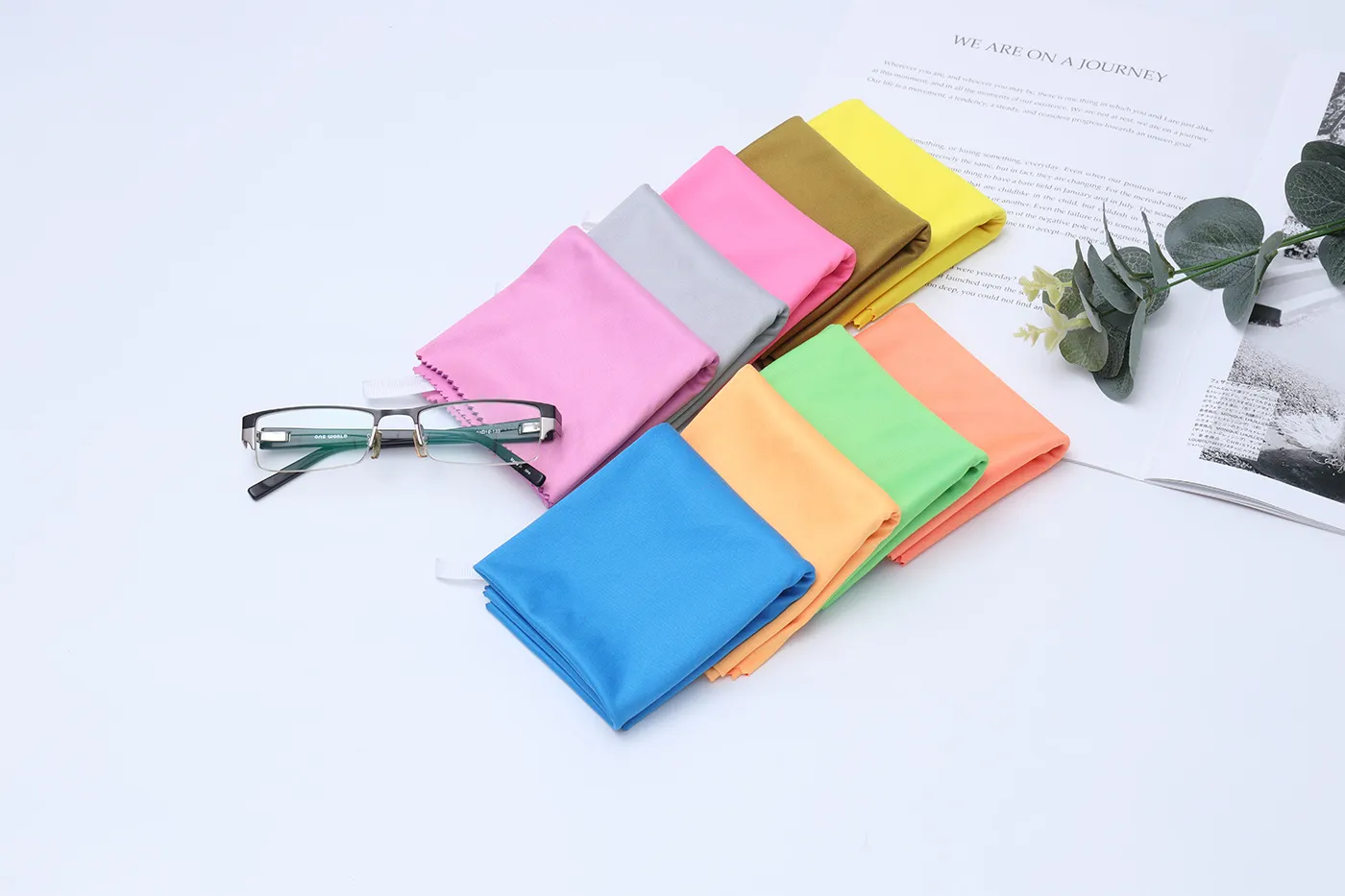
Kingda's cleaning-cloth category shows current cloth formats, and the printing guide helps with decoration decisions. The certifications page should not be used to imply anti-fog performance: its certificates and reports cover their own stated scopes.
Discuss lens-care cloth requirements. Include the exact claim, lens types, destination market, intended instructions and evidence standard. Until a specific treated product is validated, Kingda's existing cloth visuals and catalog copy should be read as cleaning-cloth information only.