The Science: How Microfiber Actually Cleans
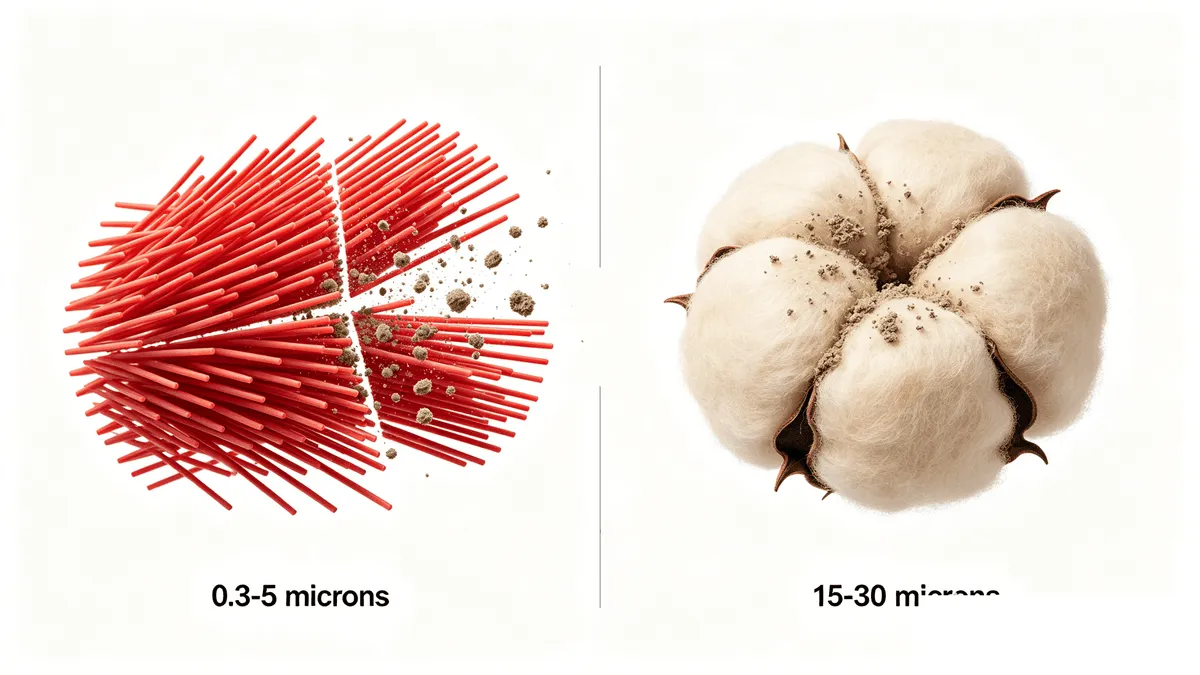
To understand why microfiber outperforms cotton, you have to look at the fiber level. A human hair is roughly 50–70 microns in diameter. A single split microfiber filament measures 0.3–5 microns — thinner than a red blood cell. When millions of these wedge-shaped filaments are packed into one square centimeter of fabric, they create an enormous combined surface area.
Split-fiber technology & the van der Waals effect
During manufacturing, bi-component yarn (polyester core + polyamide wrap) is knitted, then split through chemical and mechanical treatment. Each filament separates into 16–32 ultra-fine wedge fibers. This split structure does two things cotton cannot:
- Capillary action — the microscopic gaps between split fibers draw in liquid and oil through capillary force, the same physics that pulls water up a paper towel.
- Van der Waals adhesion — each individual filament exerts a tiny molecular attraction on dust particles. Multiplied across millions of filaments, the combined force locks dirt inside the fiber matrix until the cloth is washed in hot water.
“Think of it like a brush: the more bristles you pack into the same area, and the finer each bristle, the more dust you can pick up in one pass. Microfiber is a brush with millions of microscopic bristles.”
— Chris Woodford, science author, Explain That Stuff
Microfiber vs Cotton: Head-to-Head
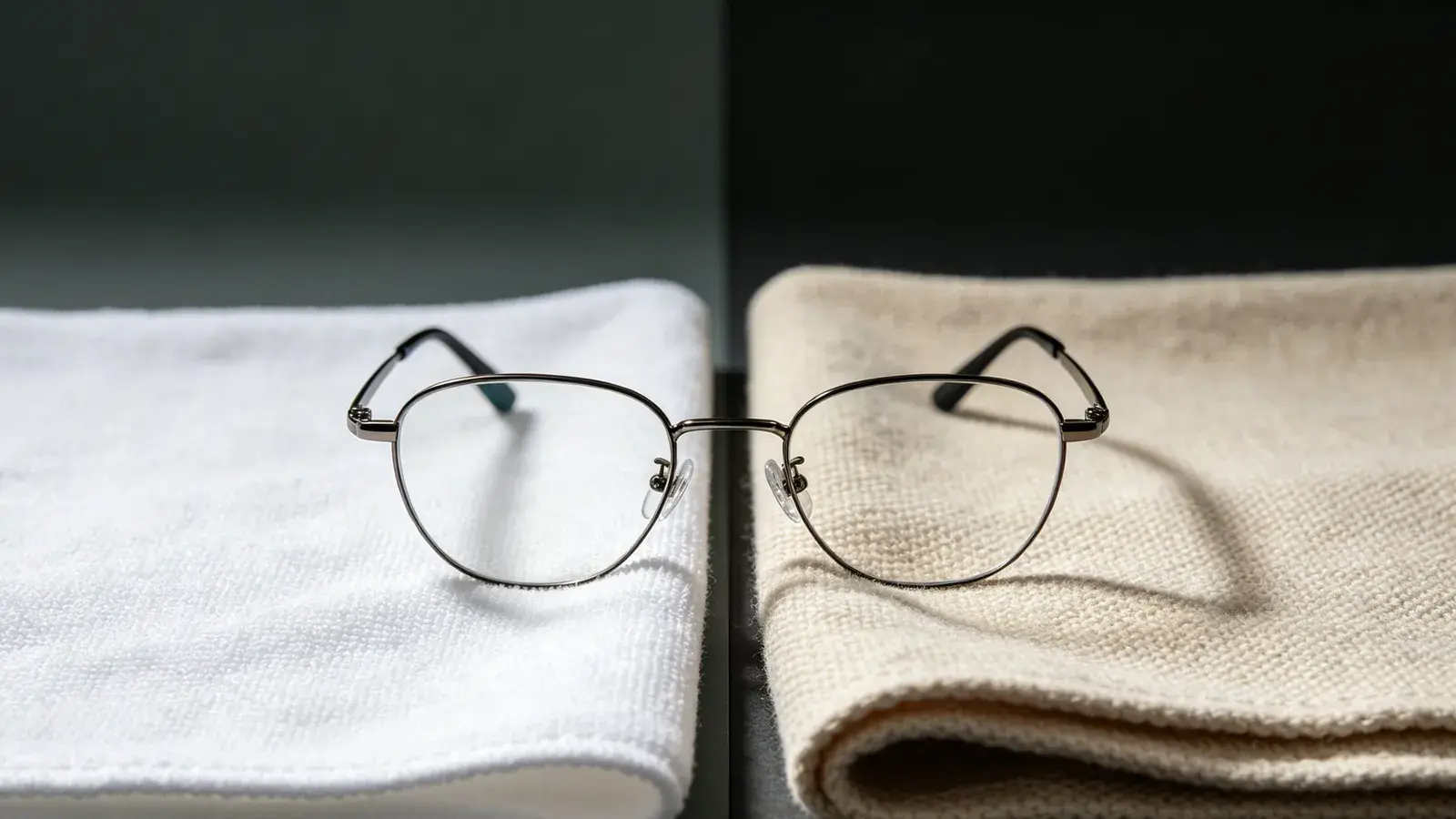
We tested both materials on AR-coated polycarbonate lenses under identical conditions. Here's how they compare across the criteria that matter most to opticians, eyewear brands and end users.
| Criterion | Microfiber | Cotton |
|---|---|---|
| Fiber diameter | 0.3–5 µm (split wedge) | 15–30 µm (round) |
| Oil & fingerprint removal | ★★★★★ Lifts oil into fiber matrix | ★★ Smears oil across surface |
| Lint shedding | None (heat-set edges) | High — leaves fibers on lens |
| Bacteria removal (dry) | Up to 99% (physical trapping) | ~30% (surface push only) |
| Chemical cleaner needed? | No — works dry or with water | Yes — needs surfactant |
| Safe for AR / blue-light coating | Yes (if ≥ 200 GSM, clean cloth) | Risk of micro-scratches |
| Durability (wash cycles) | 300–500 washes | 50–100 washes |
| Cost per piece (bulk) | Lower (longer life) | Higher (frequent replacement) |
Table 1 — Microfiber vs cotton performance on coated eyeglass lenses. Bacteria-removal figures cite peer-reviewed studies summarized by Cleanmo's microfiber science review.
GSM Guide: Choosing the Right Fabric Weight
GSM (grams per square meter) is the single most important spec when sourcing microfiber cloths — more than thread count or blend ratio. It tells you how densely the fibers are packed, which directly determines absorbency, softness and cleaning power.
| GSM range | Feel | Best use |
|---|---|---|
| 120–180 | Light, thin | Promotional giveaway cloths, low-cost bulk |
| 180–220 | Medium, balanced | Standard eyeglass cloth — the sweet spot |
| 220–280 | Dense, plush | Camera lenses, optics, premium eyewear brands |
| 280–350+ | Thick, suede-like | Jewelry polishing, screens, luxury packaging |
Table 2 — Microfiber GSM weight guide. For AR-coated eyeglass lenses we recommend 200–250 GSM: dense enough to trap grit, soft enough to avoid micro-scratches.
Safe Cleaning for AR, Blue-Light & Polarized Coatings
Modern eyeglass lenses carry delicate coatings — anti-reflective (AR), blue-light filtering, UV, mirror and scratch-resistant layers. Each is only a few nanometers thick. The wrong cloth will haze the coating within months.
The 4-step safe cleaning method
Rinse
Hold lenses under a gentle stream of lukewarm water to flush away grit that could scratch the coating.
Dot
Apply one drop of pH-neutral lens soap (never dish detergent — it strips AR layers).
Wipe
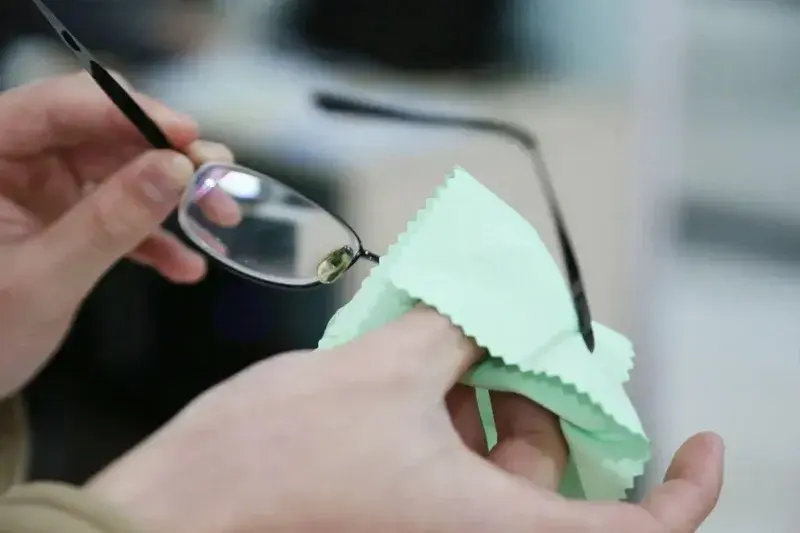
Glide a clean 200+ GSM microfiber cloth in circles from the center outward. No pressure.
Dry
Pat — don't rub — with a dry section of the cloth. Inspect for streaks under a light.
Sustainability: Does Microfiber Pollute?
Microfiber is a synthetic (polyester + polyamide), so a fair question is whether washing it sheds microplastics into waterways. The short answer: yes, but the total lifecycle impact is lower than cotton when you factor in water, pesticide and energy use.
| Factor | Microfiber | Cotton |
|---|---|---|
| Water to grow/produce (per kg) | ~10 L | ~10,000 L |
| Pesticides/herbicides | None | High (conventional) |
| Lifespan (wash cycles) | 300–500 | 50–100 |
| Microplastic shedding | Yes (mitigable) | No (but sheds cellulose) |
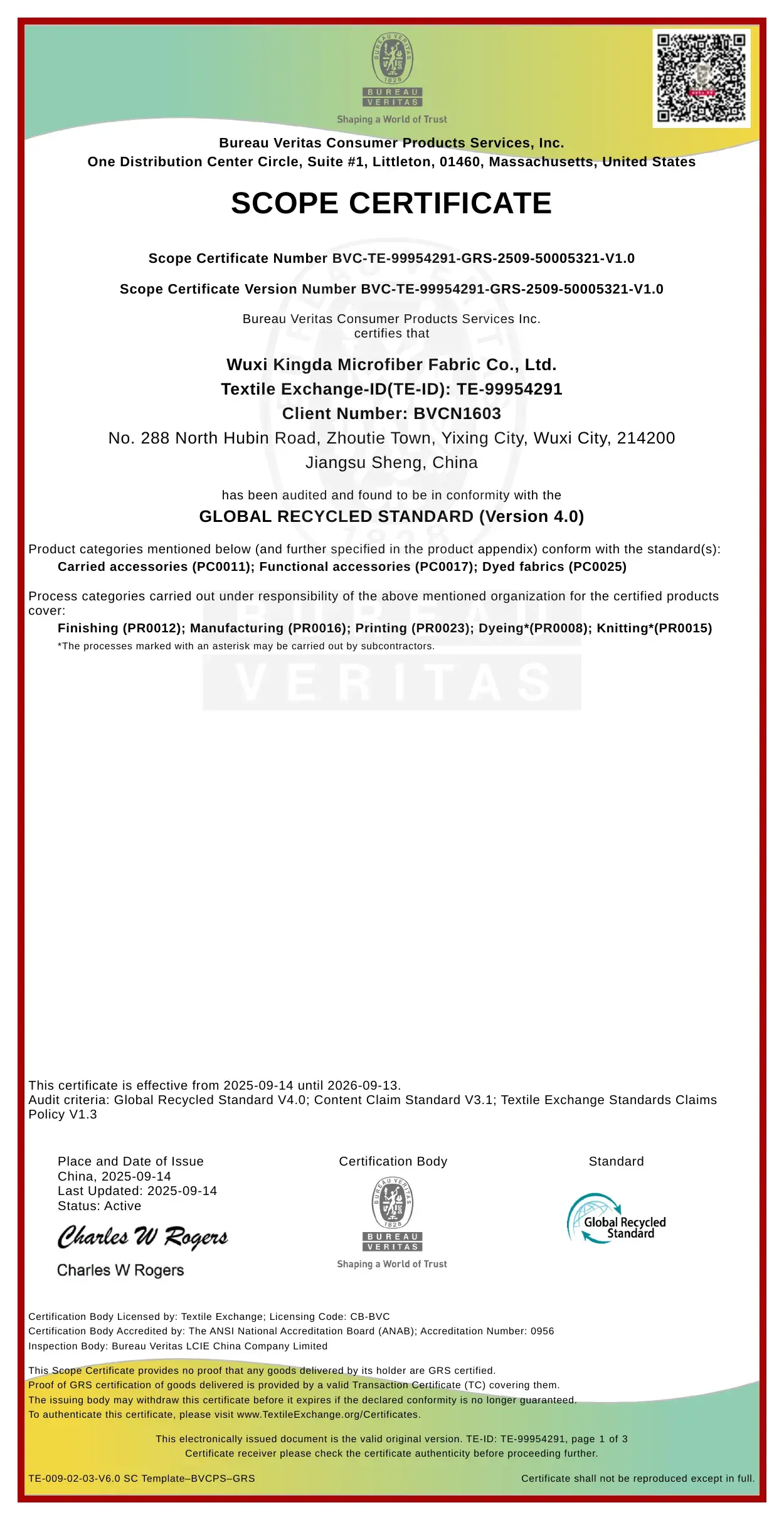
At Kingda we mitigate shedding by heat-setting every cloth at 180°C, which locks the fiber matrix and reduces loose-fiber release. We're also piloting recycled-PET (rPET) microfiber yarn made from post-consumer bottles, with a target of 30% rPET content across our promotional line by end of 2026.
How to Use & Care for Your Microfiber Cloth
- Wash new cloths once before first use to remove factory sizing.
- Machine wash warm (40–60°C) with mild detergent — no fabric softener (it coats fibers and kills absorbency).
- Air dry or tumble dry low. Never iron — heat above 200°C melts polyamide.
- Keep a dedicated cloth for lenses; don't use the same cloth for screens and greasy kitchen surfaces.
- Replace every 6–12 months for daily-use eyeglass cloths, or when the fabric feels slick instead of grippy.