
First control the project brief
Evidence note: "Independent industry guidance" means the ISO and ASQ frameworks linked below. "Kingda-specific evidence" means only the named current certificates, reports and public catalog information, each limited to its documented scope.
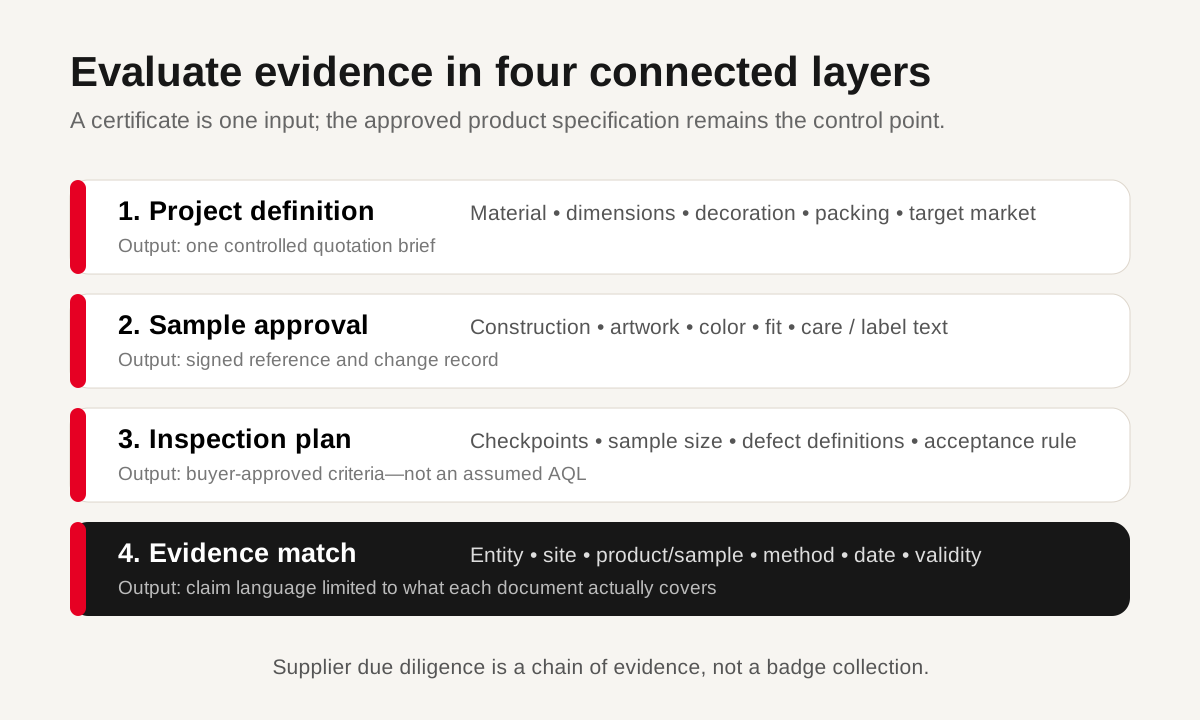
Supplier evaluation starts with the requirement you expect the supplier to meet. Define the microfiber product, construction or composition, dimensions, weight if relevant, edge finish, decoration, artwork, color reference, packing, destination market and intended claim. If those inputs remain vague, a fast quotation is not evidence that two suppliers are quoting the same thing.
Primary ISO supply-chain guidance connects purchasing control with clear requirements, supplier evaluation and verification. ASQ's supplier-quality overview likewise describes quotations, specifications, surveys or visits, certificates and prototype or validation work as different qualification inputs. These are independent frameworks; Kingda's current public capabilities page is the source for Kingda-specific process information.
Approve a representative sample and preserve the record
A sample should answer written questions, not merely look acceptable. Record which fabric, dimensions, finish, artwork revision, color reference, packaging and label text it represents. Identify any hand-made or substitute feature that will differ in production. Photograph the approved sample, assign a revision, and state who owns the final approval.
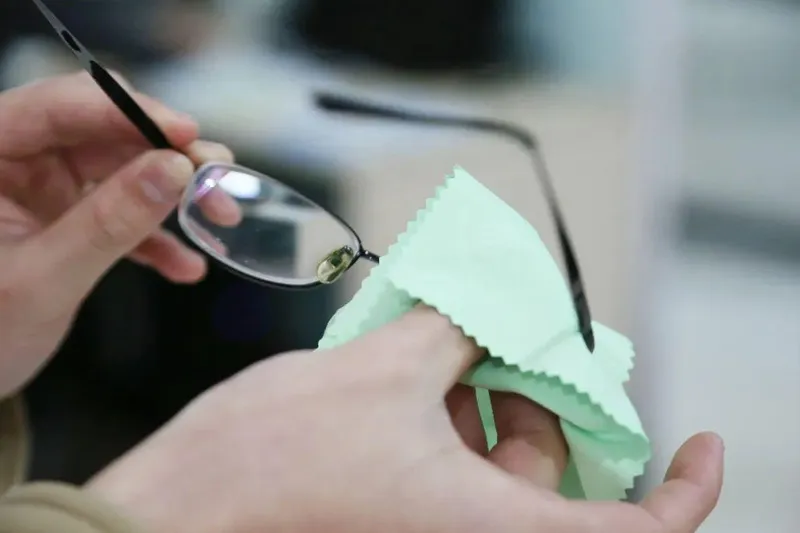
For a custom lens-cloth project, the OEM buyer's guide provides a product-level brief. For supplier qualification, the wider question is whether changes are documented and whether the production and inspection records refer back to the same approved revision.
Agree what will be inspected—and what happens if it fails
Write the checkpoints: identity and quantity, dimensions, construction, appearance, print position, color reference, stitching or edge finish, packing and any required functional test. Define defect categories, the sampling method, sample size, acceptance/nonacceptance rule, reporting format and disposition process.
ASQ's sampling guidance distinguishes attributes and variables sampling and emphasizes the plan's sample and acceptance criteria. This article deliberately does not assign a generic AQL: the buyer and supplier must agree a plan appropriate to the product risk, applicable standard and contract.
Match certificates and reports to the claim
An ISO auditing guidance document warns against treating supplier registration as sufficient evidence of its ability to meet a particular specification. Read every document by legal entity, site, scope, issuer, identifier, date and validity—and then ask whether it applies to the exact product or sample.
Kingda-owned evidence available on the certifications page currently includes:
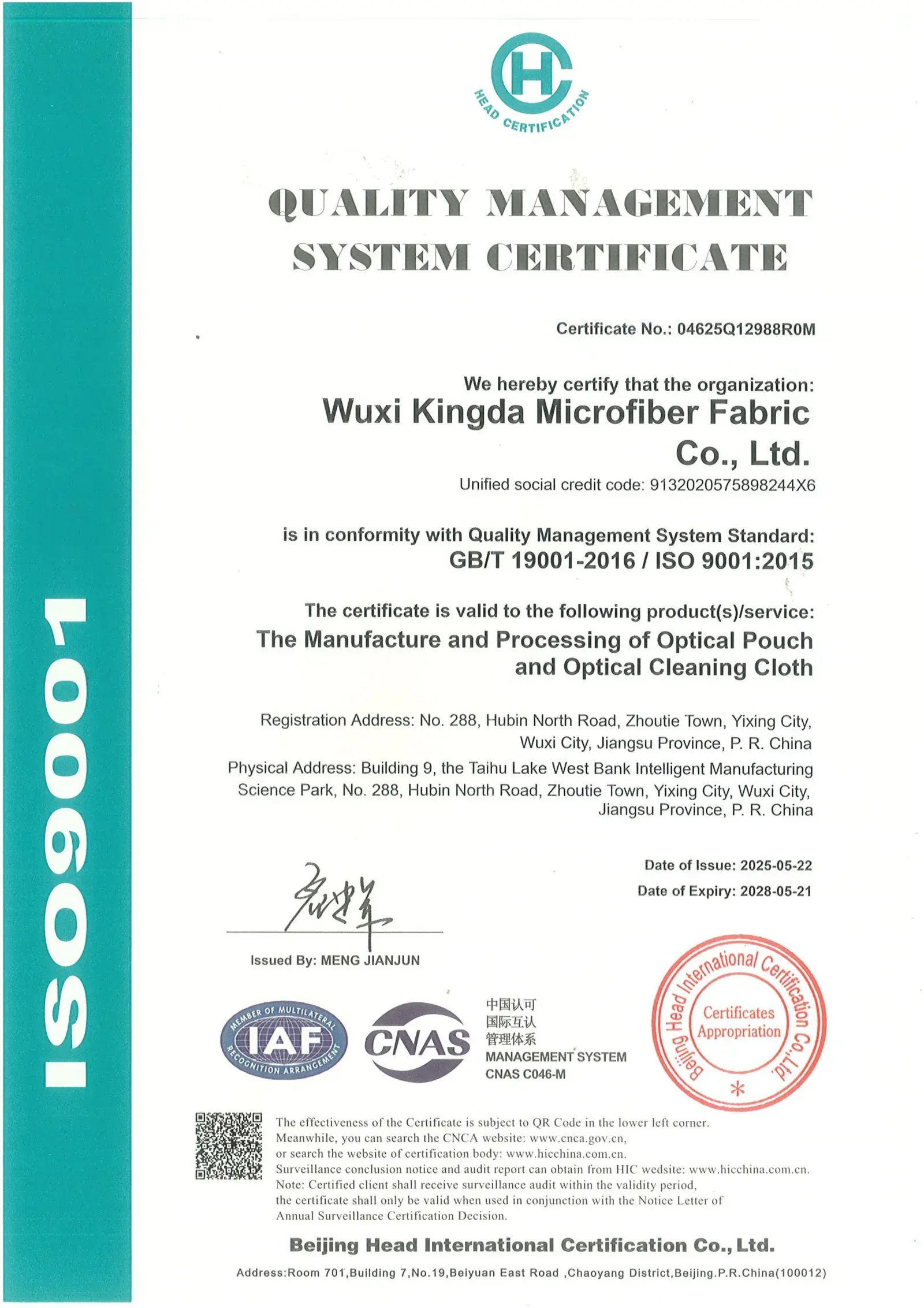
- ISO 9001:2015: certificate 04625Q12988R0M, issued by Beijing Head International Certification Co., Ltd., covering manufacture and processing of optical pouches and optical cleaning cloths through 2028-05-21. This is quality-management-system evidence, not a finished-product test report.
- GRS 4.0: Bureau Veritas scope certificate BVC-TE-99954291-GRS-2509-50005321-V1.0, active 2025-09-14 through 2026-09-13 for defined main-site product, material and process scope. As the GRS buyer guide explains, it is not proof that every shipment is certified.
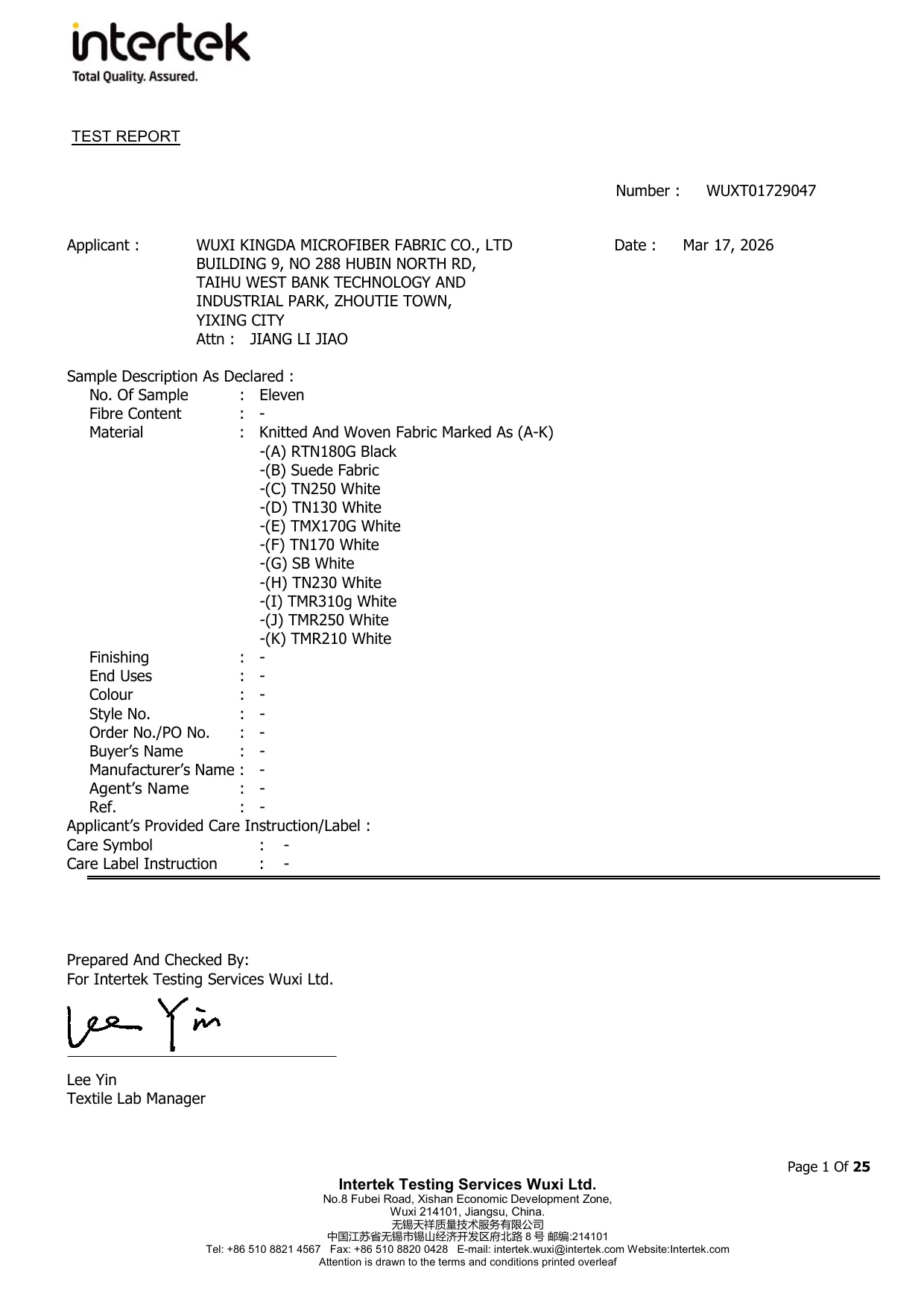
- REACH / WFD: Intertek report WUXT01729047 dated 2026-03-17 records its conclusion for eleven specified knitted and woven fabric samples. It is sample-specific evidence.
- PFAS: Intertek report WUXT01622277 dated 2025-03-12 records its conclusion for two specified white microfiber cleaning-cloth samples under the buyer's requirement. It is not a blanket product-family claim.
Use this supplier evaluation checklist
- Confirm the supplier's legal identity, manufacturing role and project contact.
- Issue one controlled specification and require assumptions to be stated in the quote.
- Approve a representative sample with a revision record.
- Agree checkpoints, sample size, defect definitions, acceptance rule and corrective-action route.
- Match each certificate or report to the entity, site, product/sample, method and date.
- Define change notification for material, process, artwork or subcontracting that affects the approved result.
- Keep the quote, approvals, evidence and inspection records together for the order.
Discuss a project quality plan with Kingda. Send the product brief, destination market and evidence requirements so the conversation can stay specific and auditable.