
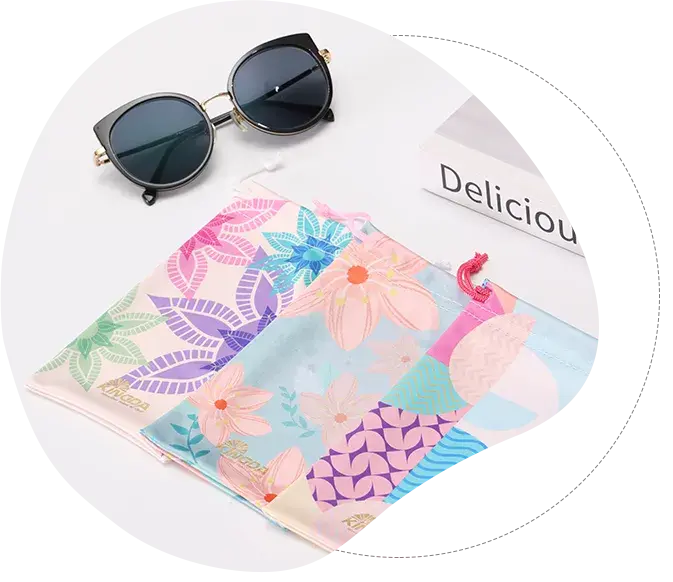
Choose the pouch material and construction first
A custom eyeglass pouch is a small product with several jobs: it stores a frame, presents the brand, and may help remove light dust as the glasses slide in and out. That combination is why a buyer should select the fabric and opening before asking for a logo price. A current custom drawstring pouch listing from Earthangels Textiles similarly presents material, dimensions, printing and closure as one specification rather than isolated add-ons.
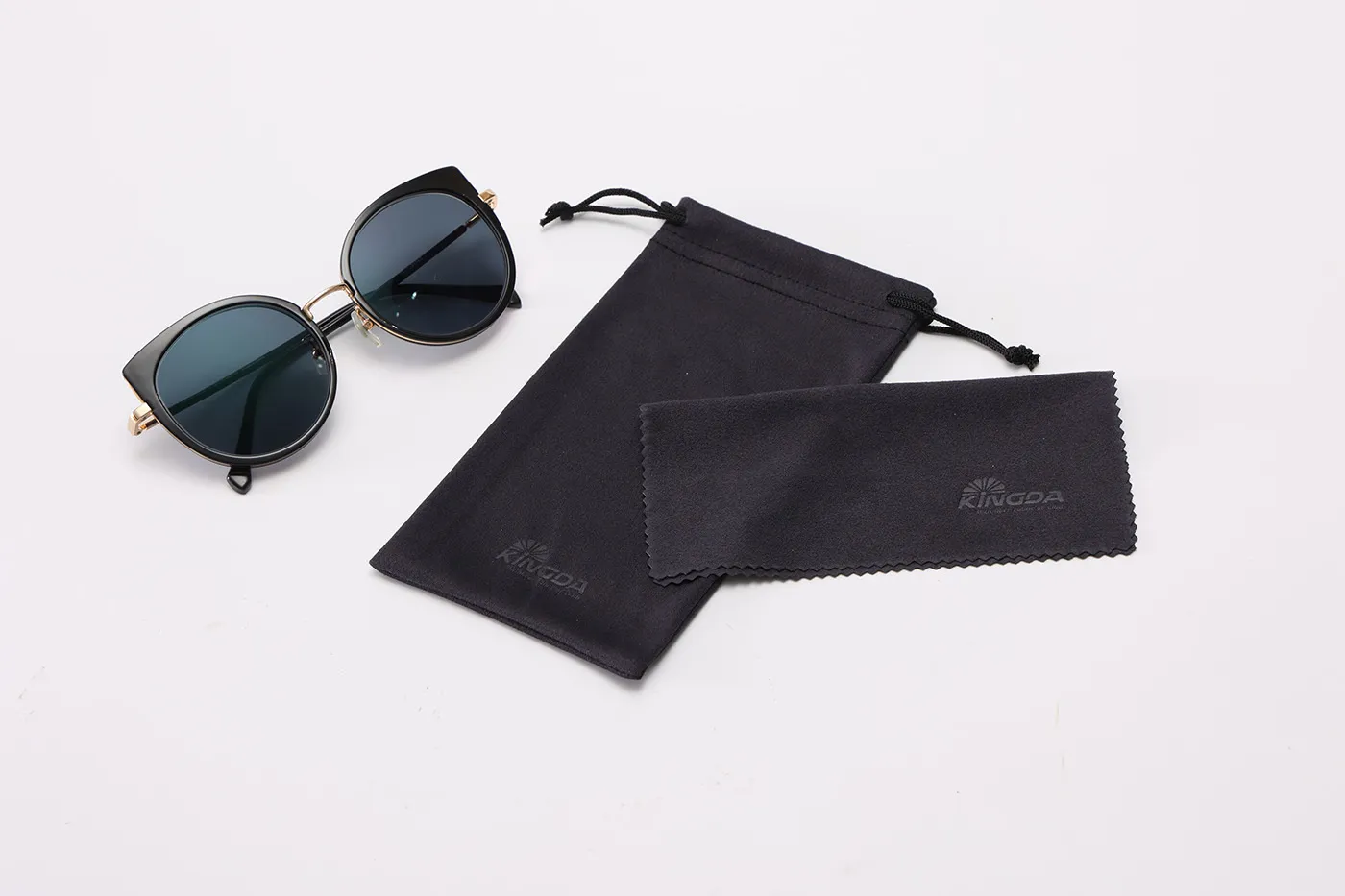
Plain microfiber is a clean starting point for distributors and optical programs that want a soft, lightweight pouch. Flocked microfiber adds a velvet-touch surface and a more tactile presentation. The right choice depends on whether the pouch is a practical accessory, a retail gift, or part of a larger case-and-cloth set. Do not promise that any pouch replaces intentional lens cleaning; Kingda’s category FAQ correctly distinguishes incidental lens contact from using a dedicated cleaning cloth.
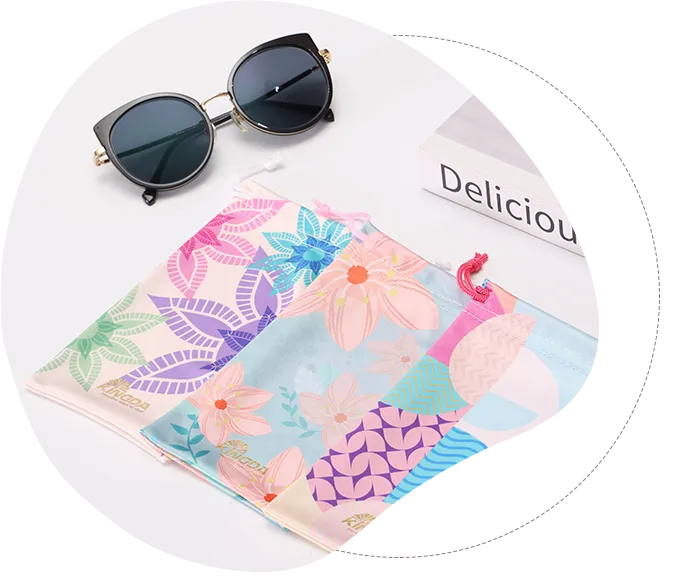
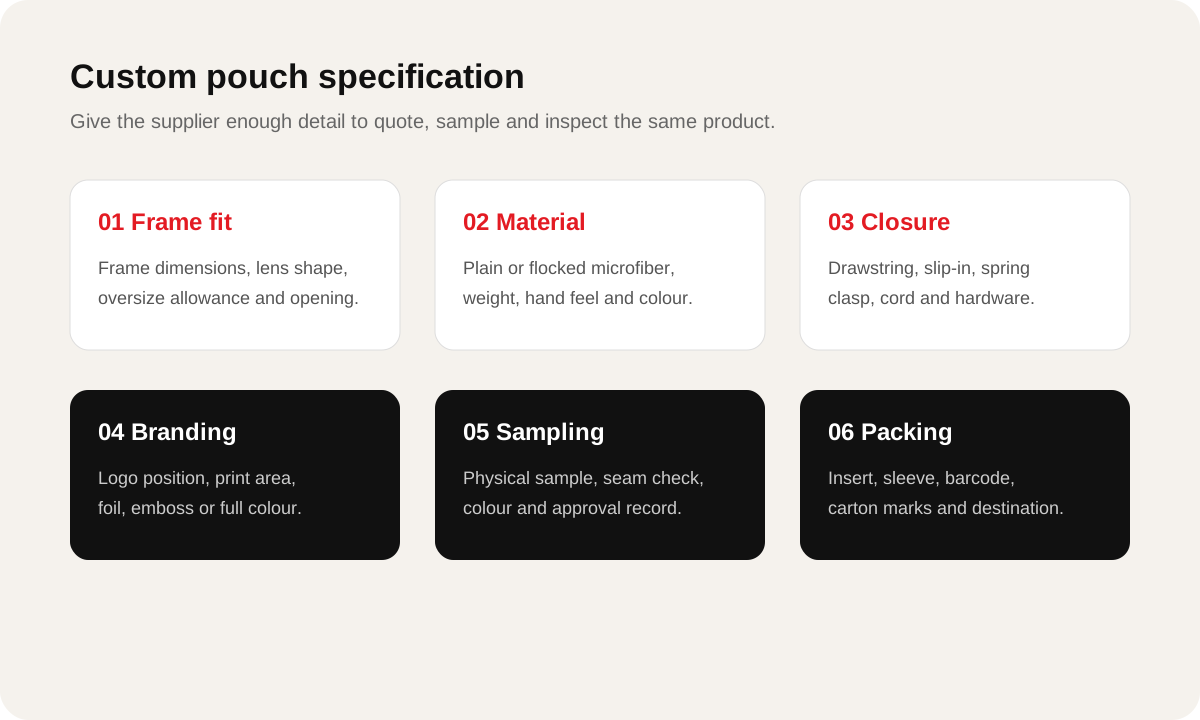
Logo, closure and size options that change the quote
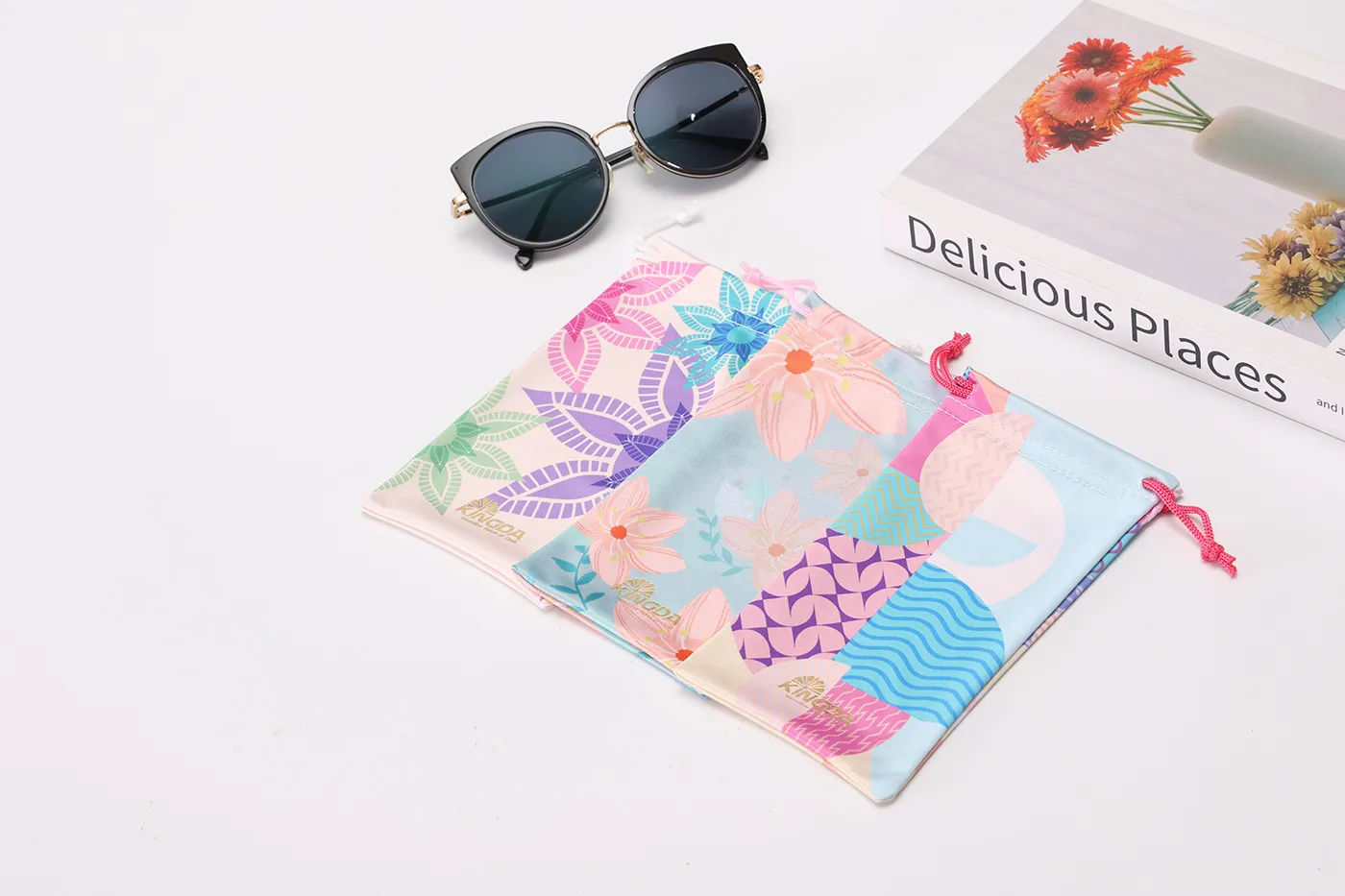
Logo treatment should follow the pouch surface and the brand’s intended moment. Full-colour printing works for artwork-led programs; foil gives a metallic accent; blind embossing creates tone-on-tone branding; and an unbranded pouch lets a distributor add its own label or sleeve. Ask the supplier to show the logo on the actual fabric because a soft, textured surface can change how small type and fine lines read.
- Closure: drawstring for a familiar retail pouch, slip-in for speed, or a spring clasp where the program needs a different opening experience.
- Fit: provide frame length, lens width, temple thickness and any oversized or folded-frame allowance; a standard pouch is not automatically a good fit for every sunglasses shape.
- Colour: name the target colour or Pantone reference, then approve it under a consistent light source on the final material.
- Pack: define an insert, sleeve, barcode label, polybag or coordinated case before sampling.
MOQ, sampling and quality checks
Wholesale buyers should treat MOQ and sample timing as variables, not universal promises. The decoration method, number of colours, fabric, size, accessories and packing can all change the production plan. Kingda’s current public FAQ says its typical cloth MOQ starts from 1,000 pieces per design, while pouch and case quantities should be confirmed against the exact construction and program.
Request a sample that matches the final material, closure and logo process. Check the opening, seam alignment, cord length, dimensions, colour, surface feel and any print or emboss registration. Record the approved sample and artwork version so the bulk lot can be compared against something concrete. Current custom pouch SERPs consistently foreground sampling and artwork approval; that is a useful procurement signal, not permission to copy another supplier’s lead time or claims.
Use four simple quality gates
Fit
Place the real frame or a dimensional dummy inside and check the opening and allowance.
Finish
Inspect seams, corners, cord or clasp, logo placement and fabric consistency.
Use
Test opening, closing, storage and light lens contact for the intended retail experience.
Pack
Check insert, label, barcode, carton marks and destination-market documents.
Wholesale quote brief: the information to send
Send the supplier one structured brief instead of a logo alone. Include the target frame dimensions, pouch style, fabric or flocking preference, colour, closure, logo file, print or emboss size, quantity by design, packing format, destination and required ship window. If you are comparing a pouch with a hard case, link the same frame dimensions and retail position to both options so the comparison is fair.
For the pouch route, start with Kingda’s custom eyeglass pouch category, then review the flocked pouch example and solid-colour pouch example. For the adjacent case decision, read the pouch-versus-case guide. When your brief is ready, request a pouch sample plan and ask for a written confirmation of MOQ, sample scope and production assumptions.